


Moisture absorption is a crucial property when it comes to various types of cords, especially flat cotton cord. As a supplier of flat cotton cord, understanding the moisture absorption rate of our product is not only essential for our customers but also for maintaining the quality and performance of the cord in different applications.
Understanding Moisture Absorption
Moisture absorption refers to the ability of a material to take in and retain water vapor from the surrounding environment. In the case of flat cotton cord, this property can significantly impact its strength, flexibility, and durability. Cotton, as a natural fiber, has a unique molecular structure that allows it to absorb moisture. The hydroxyl groups in the cellulose molecules of cotton can form hydrogen bonds with water molecules, enabling the cord to hold a certain amount of water.
Factors Affecting the Moisture Absorption Rate of Flat Cotton Cord
Several factors influence the moisture absorption rate of flat cotton cord. One of the primary factors is the relative humidity of the environment. Higher relative humidity means there is more water vapor in the air, which increases the likelihood of the cord absorbing moisture. For example, in a tropical climate with high humidity levels, the flat cotton cord will absorb more moisture compared to a dry desert environment.
The temperature also plays a role. Generally, as the temperature increases, the moisture absorption rate of cotton decreases. This is because warmer air can hold more water vapor, reducing the driving force for the cord to absorb moisture. However, extreme temperatures can also have a negative impact on the cord's structure, potentially affecting its moisture absorption properties.
The surface area of the cord is another important factor. Flat cotton cord has a larger surface area compared to round cotton cord of the same diameter. This increased surface area provides more contact with the surrounding air, allowing for greater moisture absorption. You can learn more about Round Cotton Cord on our website.
The density of the cord can also influence moisture absorption. A denser cord may have less space between the fibers, reducing the amount of moisture it can absorb. On the other hand, a looser cord with more gaps between the fibers may absorb moisture more readily.
Measuring the Moisture Absorption Rate
To determine the moisture absorption rate of flat cotton cord, a standardized testing method is typically used. One common approach is the gravimetric method. In this method, a sample of the flat cotton cord is first dried in an oven at a specific temperature until it reaches a constant weight. This dry weight is recorded.
The dried sample is then placed in a controlled environment with a known relative humidity and temperature. After a certain period, the sample is removed from the environment and weighed again. The difference between the wet weight and the dry weight represents the amount of moisture absorbed by the cord. The moisture absorption rate is then calculated as a percentage of the dry weight.
For example, if a dry sample of flat cotton cord weighs 10 grams and after being exposed to a humid environment, it weighs 11 grams, the moisture absorption rate is ((11 - 10) / 10) * 100 = 10%.
Typical Moisture Absorption Rates of Flat Cotton Cord
Under normal atmospheric conditions (around 20°C and 65% relative humidity), flat cotton cord typically has a moisture absorption rate of around 7 - 8%. However, this can vary depending on the factors mentioned above. In a very humid environment (e.g., 90% relative humidity), the moisture absorption rate can increase to 15 - 20%.
It's important to note that these are general estimates, and the actual moisture absorption rate of our flat cotton cord may vary slightly depending on the specific manufacturing process and the quality of the cotton used. We use high - quality 100% Cotton Cord in our production to ensure consistent and reliable performance.
Implications of Moisture Absorption for Flat Cotton Cord
The moisture absorption rate of flat cotton cord has several implications for its use in different applications. In some cases, moisture absorption can be beneficial. For example, in applications where the cord needs to be used in a humid environment, such as in gardening or outdoor decoration, the ability to absorb moisture can prevent the cord from becoming brittle and breaking.
However, excessive moisture absorption can also have negative effects. When the cord absorbs too much moisture, it can become heavy and lose its strength. This can be a problem in applications where the cord needs to support weight, such as in hanging baskets or in some types of crafts.
Moisture can also promote the growth of mold and mildew on the cord, especially if it is not dried properly. This can not only damage the cord but also pose a health risk in some cases.
Managing Moisture Absorption
As a supplier, we take several steps to manage the moisture absorption of our flat cotton cord. During the manufacturing process, we ensure that the cotton is properly treated to reduce the risk of excessive moisture absorption. We also provide storage and handling guidelines to our customers to help them maintain the quality of the cord.
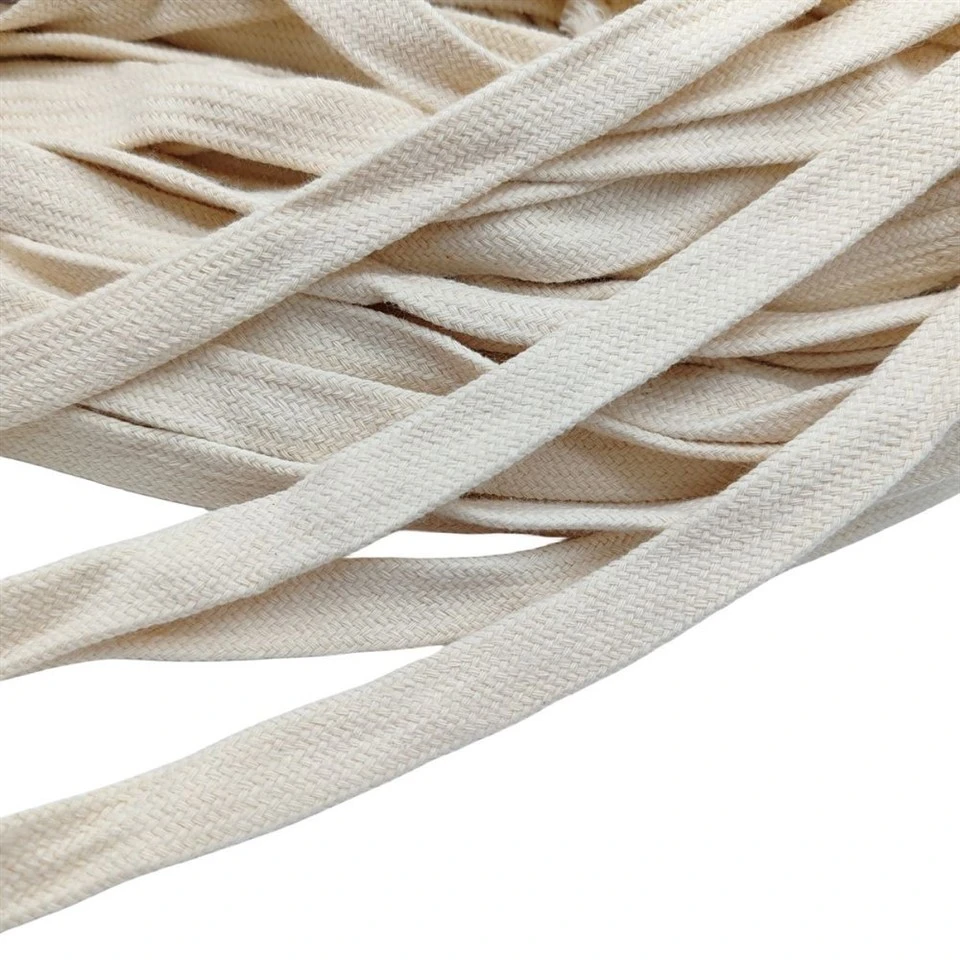

For example, we recommend storing the cord in a dry place away from direct sunlight and high humidity. If the cord gets wet, it should be dried thoroughly before being used again.
Conclusion
In conclusion, the moisture absorption rate of flat cotton cord is an important property that is influenced by various factors such as relative humidity, temperature, surface area, and density. Understanding this property is crucial for both us as a supplier and our customers. By providing high - quality Flat Cotton Cord and offering guidance on managing moisture absorption, we aim to ensure that our customers get the best performance from our product.
If you are interested in purchasing our flat cotton cord or have any questions about its moisture absorption rate or other properties, please feel free to contact us. We are more than happy to discuss your specific requirements and provide you with the best solutions for your needs.
References
- ASTM D2495 - 11(2017) Standard Test Method for Moisture in Cotton by Oven - Drying.
- Textile Institute. "The Textile Institute Manual of Textile Testing."


