


What is the heat resistance of Paracord 550?
As a supplier of Paracord 550, I often receive inquiries about the various properties of this versatile cord, and one question that comes up quite frequently is about its heat resistance. In this blog post, I'll delve into the details of Paracord 550's heat - resistant capabilities, exploring what it can and cannot withstand, and how this characteristic affects its practical applications.
Paracord 550, also known as Type III paracord, is a lightweight, nylon - based cord that has gained widespread popularity due to its high strength - to - weight ratio. It was originally developed for use in the suspension lines of parachutes during World War II, and since then, its applications have expanded to numerous fields, including camping, survival, crafting, and military operations.
The heat resistance of Paracord 550 is primarily determined by its nylon composition. Nylon is a synthetic polymer that has certain inherent thermal properties. Generally, nylon starts to soften at around 180 - 230 degrees Celsius (356 - 446 degrees Fahrenheit). When exposed to temperatures within this range, the physical structure of the Paracord 550 begins to change. The fibers start to lose their rigidity and may become more malleable.
At lower temperatures, Paracord 550 can withstand short - term exposure to moderate heat sources. For example, if you accidentally hold the cord close to a campfire for a brief moment, it may not be severely damaged. However, prolonged exposure to even relatively low - level heat can cause degradation over time. The nylon fibers may start to break down, which will weaken the overall strength of the cord.
When the temperature rises above the softening point, the consequences are more severe. The cord can melt, and once melted, its structural integrity is completely compromised. A melted Paracord 550 loses its ability to bear weight and perform its intended functions. For instance, in a survival situation where you rely on the cord to secure a shelter or create a makeshift pulley system, a melted cord can lead to failure of these crucial setups.
It's important to note that the heat resistance can also be affected by other factors. The thickness and quality of the Paracord 550 play a role. A higher - quality cord with thicker fibers may have slightly better heat - resistant properties compared to a thinner or lower - grade alternative. Additionally, the presence of any coatings or treatments on the cord can influence its reaction to heat. Some specialty Paracords may be treated to enhance their heat resistance, but these are less common.
In practical applications, understanding the heat resistance of Paracord 550 is essential. In camping and outdoor activities, you need to be cautious when using the cord around heat sources such as stoves, lanterns, or open fires. If you're using it to secure a cooking pot over a campfire, make sure there is a sufficient distance between the cord and the flames to prevent overheating.

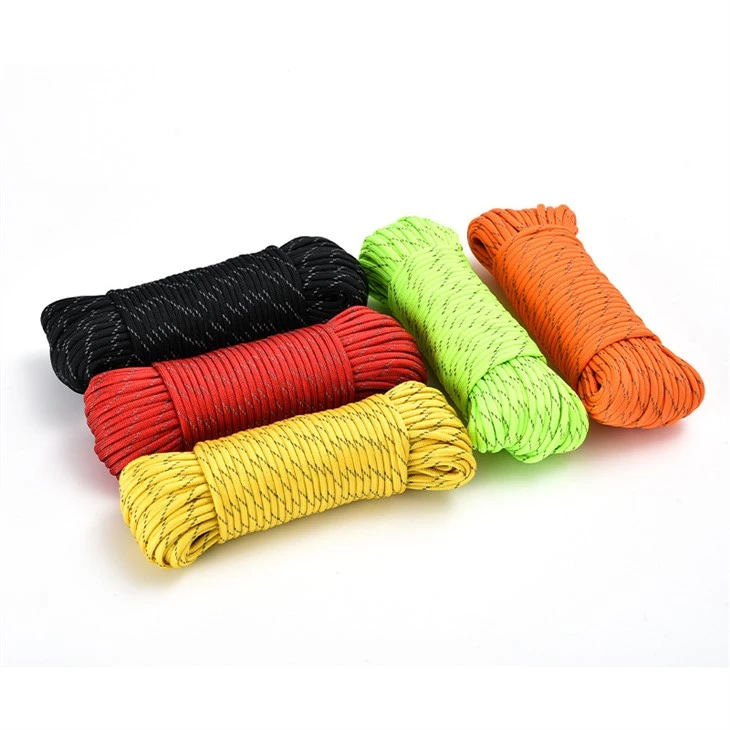
In the crafting world, where Paracord 550 is often used to make items like Mens Paracord Bracelets, heat can be a concern during the manufacturing process. For example, if you're using heat - based tools like a heat gun to seal the ends of the cord, you need to control the temperature carefully. Excessive heat can cause the cord to melt and ruin the appearance and functionality of the final product.
Another aspect to consider is the comparison with other types of cords. Paracord 3mm is a thinner version of the paracord. Generally, thinner cords have less mass, which means they can heat up more quickly when exposed to a heat source. As a result, Paracord 3mm may have a lower effective heat resistance compared to the standard Paracord 550.
When it comes to industrial or military applications, the heat - resistant properties of Paracord 550 are also carefully evaluated. In military operations, where the cord may be used in various harsh environments, including those with high - temperature conditions, it's crucial to know its limitations. For example, in desert regions where the ground temperature can be extremely high, the cord needs to maintain its strength and integrity.
In conclusion, the heat resistance of Paracord 550 is an important characteristic that affects its usability in a wide range of scenarios. While it can withstand short - term exposure to moderate heat, it has a relatively low softening point, and exposure to high temperatures can cause significant damage. As a supplier, I always recommend that customers take the heat - resistant properties into account when using Paracord 550.
If you're interested in purchasing Paracord 550 for your specific needs, whether it's for camping, crafting, or other applications, I encourage you to reach out for a detailed discussion. We can provide you with more information about the quality, heat - resistant capabilities, and other features of our Paracord 550. Our team is ready to assist you in finding the right product that meets your requirements. Let's start a conversation about how Paracord 550 can be a valuable addition to your projects.
References
- "Nylon: Properties and Applications" - Polymer Science Journal
- "Paracord in Outdoor and Military Use" - Defense and Outdoor Equipment Magazine


